
Short answer: a bulkhead fitting lets a brake line pass through a panel, a firewall, frame rail, or chassis bracket, while giving the line a solid, supported anchor point right where it crosses. It’s the difference between a line that’s properly secured at a stress point and one that’s just floating through a hole, flexing against sheet metal every time the vehicle moves.
Why a plain hole through a panel isn’t enough
A brake line running loose through an unsupported hole in a firewall or frame rail has nothing stopping it from rubbing against raw metal at every bump and every heat cycle, which is a slow but real way to wear through a line over years of service. A bulkhead fitting clamps the line at that exact crossing point, taking the flex out of the line right where the panel would otherwise be chafing it.
How they’re built
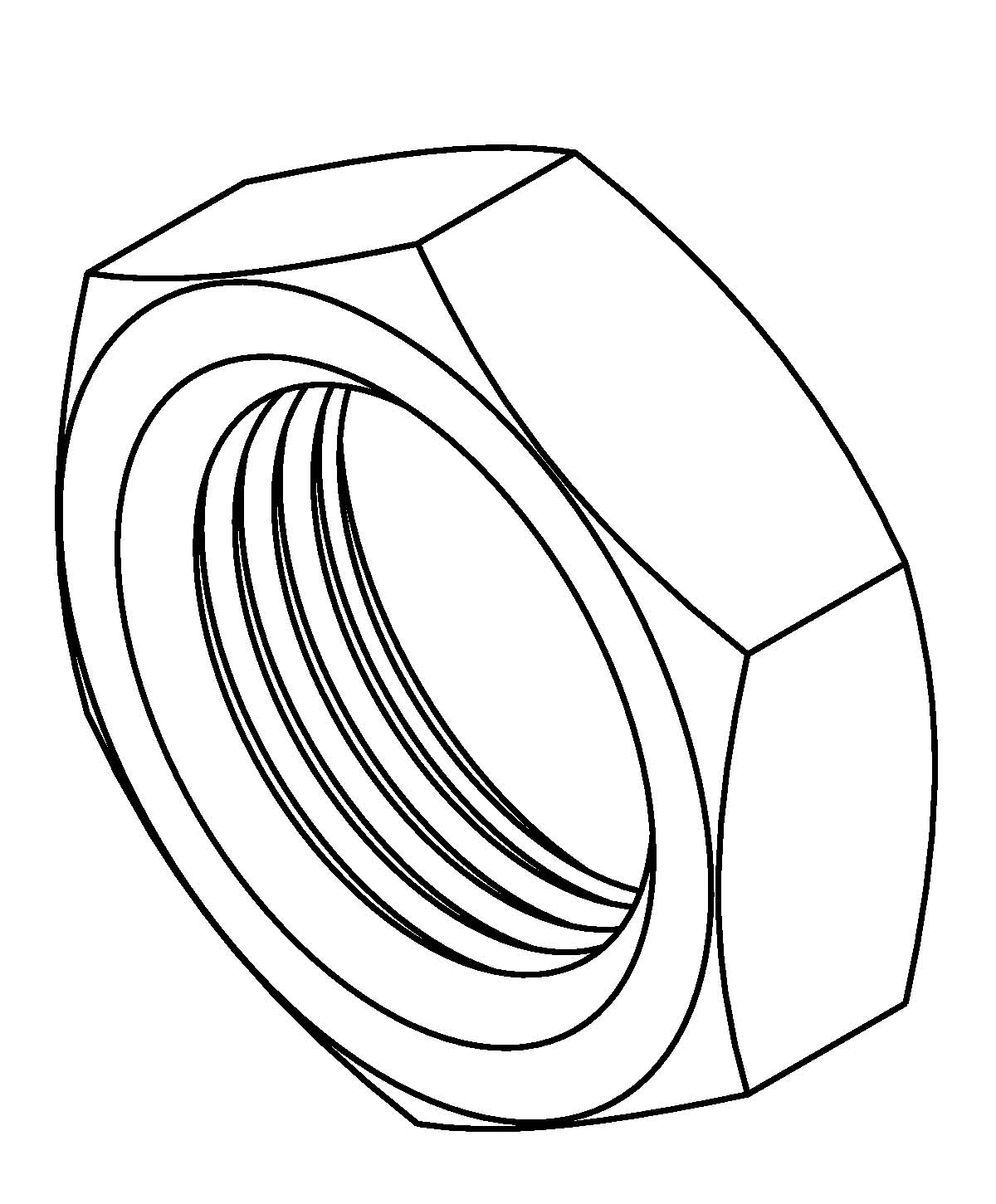
A bulkhead fitting is a nut that threads onto a matching fitting or union, with the panel sandwiched between a shoulder on the fitting and the nut itself, tightening it draws the two together and clamps the panel solidly in between. Because they’re doing double duty as both a fitting and a mounting point, bulkhead nuts are sized and threaded to match the specific fitting or line they’re used with, the same way any other brake thread is.
Where they typically show up
- Firewall crossings, where a line moves from the engine bay to the cabin side (or to a remote reservoir/proportioning valve mounted inside).
- Frame rail penetrations on a line running the length of the chassis.
- Any bracket or panel where a line needs a fixed, supported point rather than free-floating length.
What we stock
BrakeQuip Products carries bulkhead nuts across common metric and SAE thread sizes, BQ13 (5/8 x 18NF), BQ88 (M14 x 1.5), and BQ89 (7/8 x 18NS) among them, in the Bulkhead Nuts category.